When a PowerPoint presentation has an open password, you must enter the correct password before you can view the file. If the PowerPoint password is forgotten, MyPassRecovery Desktop can help with PPT password recovery. This guide shows how to import the protected presentation, let the software analyze password recovery difficulty, submit the password recovery task, and use the recovered password to open the presentation.
What Is PPT Password Recovery?
PPT password recovery means finding the open password required to unlock a protected PowerPoint presentation. A PowerPoint open password is different from read-only protection or editing restriction: an open password blocks the presentation before it opens, while editing restriction may allow viewing but limit changes.
When MyPassRecovery Desktop detects an open password on a PPT or PPTX file, it starts the password recovery workflow. The password recovery process may analyze the presentation encryption type, estimate recovery difficulty, and return a possible password result after processing.
When to Use This Guide
Use this guide when you need PPT password recovery for a presentation that asks for a password before opening.
- The PowerPoint presentation asks for a password before it opens.
- The original PPT open password has been forgotten.
- The presentation content needs to be viewed, but the password is no longer available.
- You want to use MyPassRecovery Desktop for password recovery and open the presentation with the recovered password.
When This Guide Does Not Apply
If the presentation opens normally but slide content cannot be edited, it is usually an editing restriction removal case rather than password recovery. If the file is damaged, has the wrong extension, or is locked by operating system permissions, password recovery may not solve the problem.
Before You Start
Before starting password recovery, prepare the software account and the protected PowerPoint presentation. Keep the file on a local drive and make sure it is not open in PowerPoint or WPS Office.
- Install and sign in to MyPassRecovery Desktop.
- Prepare a PPT or PPTX presentation with an open password.
- Keep the network connection stable because password recovery communicates with the service.
- Close the PowerPoint window that is using the presentation before importing it.
Operation Steps
Step 1: Open MyPassRecovery Desktop
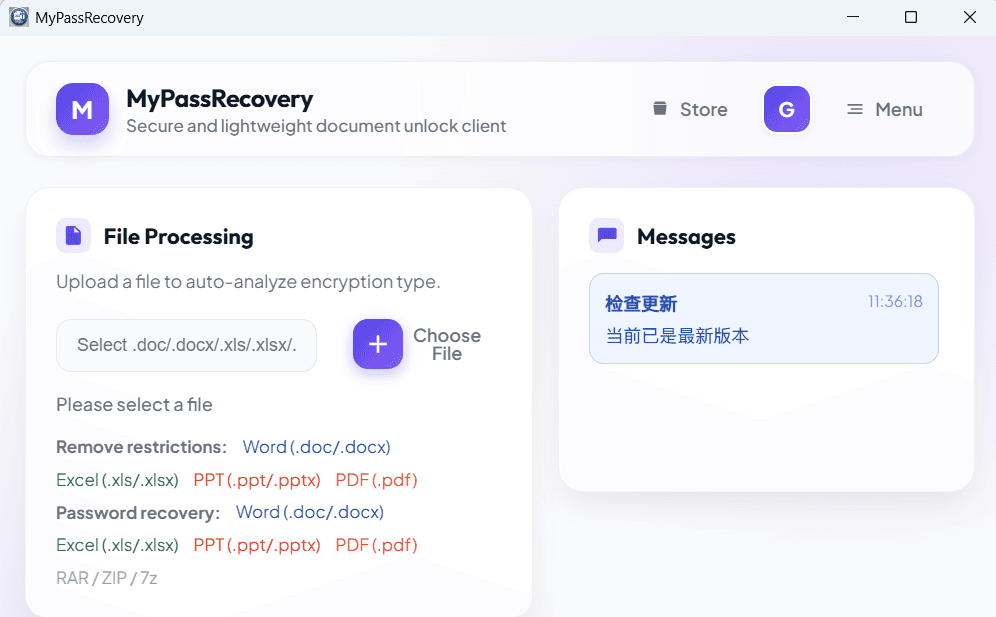
Open MyPassRecovery Desktop and confirm that your account is signed in. Password recovery requires the client to connect to the service and read the PowerPoint file, so check the message center for login errors, network issues, or service pause messages before starting.
Step 2: Import the PPT File for Password Recovery
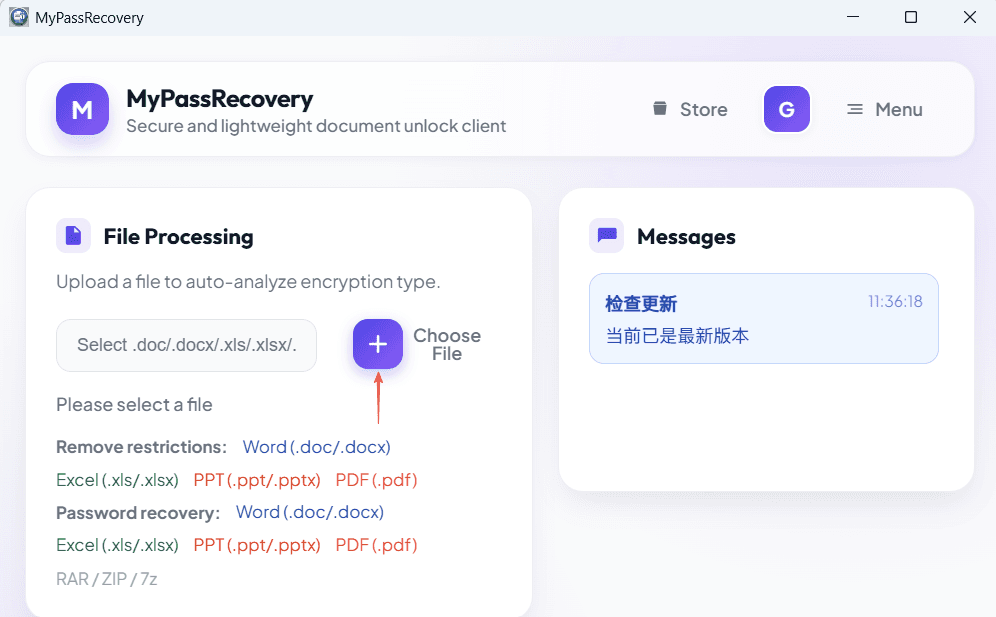
In the Document Processing area, click the file selection button and choose the PPT or PPTX file that needs password recovery. After import, the software reads the file path and checks whether the presentation has an open password.
Step 3: Wait for Password Type and Difficulty Analysis
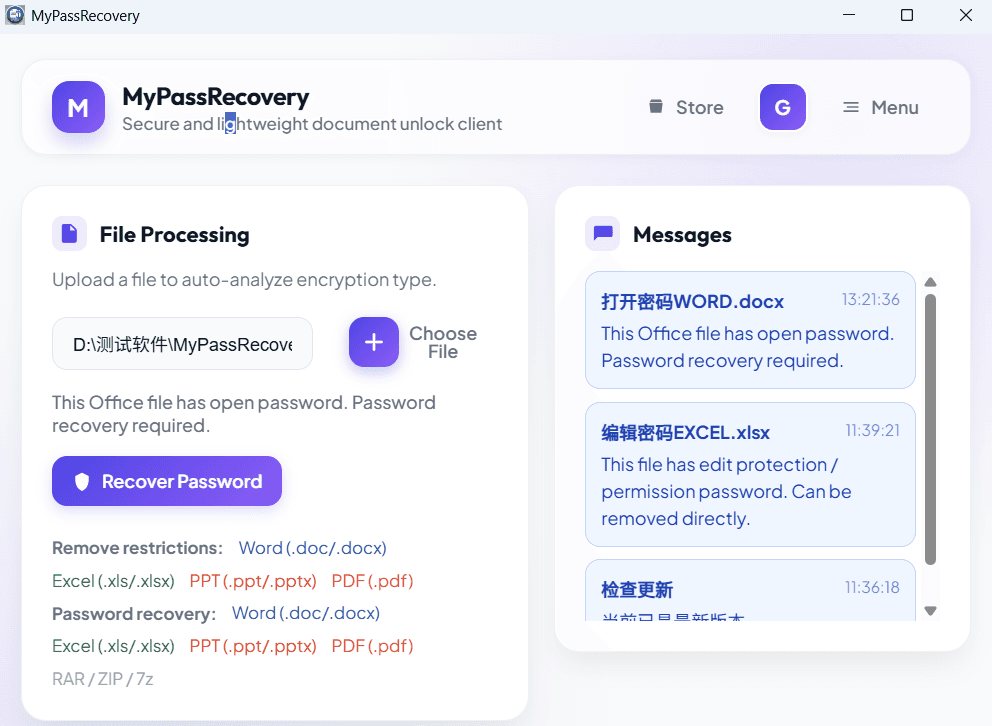
After the file is imported, MyPassRecovery Desktop analyzes the PPT password type and password recovery difficulty. If the presentation is protected by an open password, the software should enter the password recovery workflow and show the related task status.
Step 4: Submit the Password Recovery Task
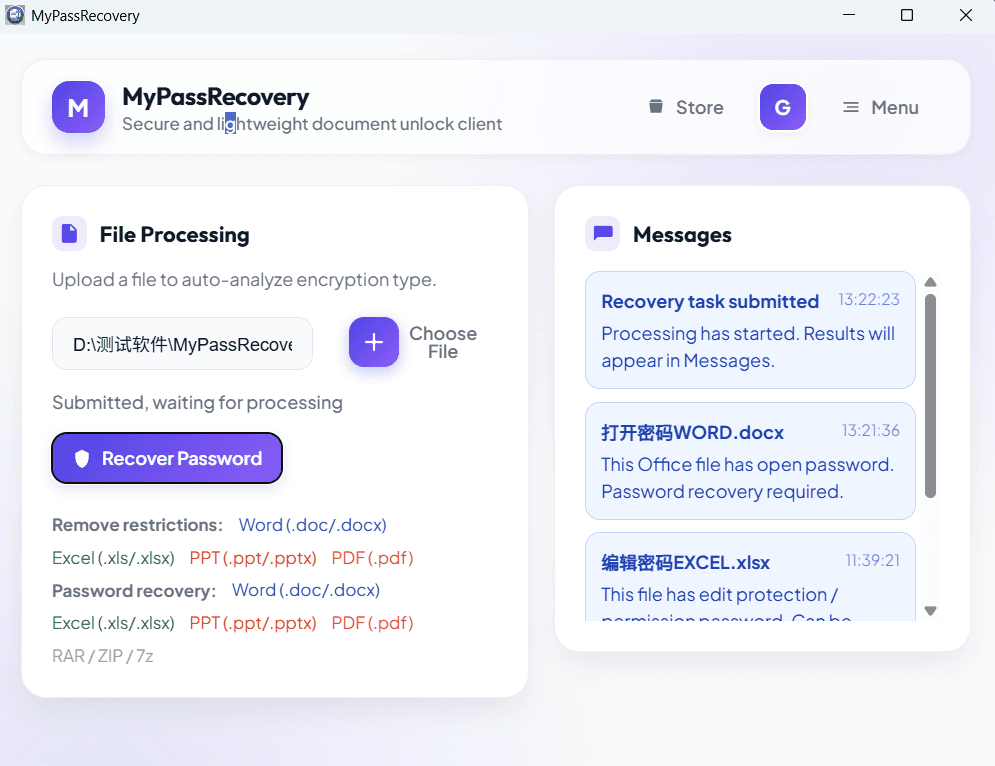
After the software confirms the PowerPoint open password case, follow the interface prompt to submit the password recovery task. Password recovery may take time depending on password complexity, presentation encryption, and service status. Keep the client online while waiting.
Step 5: View the Password Recovery Result
When password recovery is complete, check the result area in the software. Copy or record the recovered password, reopen the original presentation, and enter the recovered password in the password box. If the presentation opens, the password recovery workflow is complete.
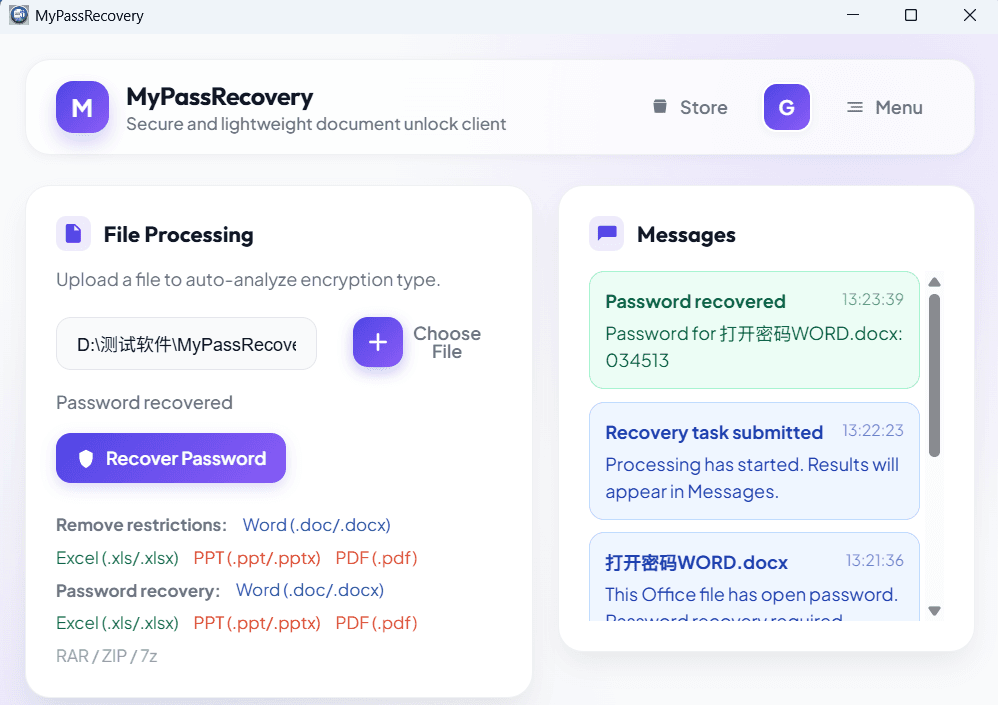
Result
After password recovery is complete, MyPassRecovery Desktop usually displays the password that can open the PowerPoint presentation. Use that password to open the original protected presentation. Password recovery does not automatically modify the PPT file or remove its protection; it helps you recover the password required to open the presentation.
Usage Tips
- Only use password recovery on PPT files you are authorized to process.
- Keep the network stable and do not close MyPassRecovery Desktop during password recovery.
- After receiving the recovered password, open the presentation immediately to confirm that the password works.
- If you do not want to enter the password again later, open the presentation and save a new copy with your preferred protection settings.